Open Data Watch is an international non-profit, non-governmental organization that works at the intersection of open data and official statistics. It monitors the accessibility and comprehensiveness of official data in over 180 countries and provides practical information and assistance in implementing open data policies and systems. The Open Data Watch team has unparalleled experience in development data and is committed to making open data a global reality in support of Sustainable Development Goals.
The fundamental principle of the 2030 development agenda is to leave no one behind. Achieving real inclusion – and monitoring progress – will require a significant improvement in the availability of data.
WELCOME TO THE OPEN DATA WATCH WEBSITE! We are very happy for your visit to the ODW website and hope that it makes looking for information about ODW’s work easy…
The World Bank’s World Development Report 2016 “Digital Dividends” includes several references to the Data Revolution. It says that even as digital technologies have spread rapidly in the world, the…
Open Data for Development (OD4D) announces the Africa Open Data Collaboration Fund which provides funding for the Africa Open Data Community to advance the African Data Revolution….(more)
The Data Revolution for Sustainable Development is poised to transform the way governments, citizens, and companies do business. This report provides recommendations based on an assessment of the cost of the core statistical tools needed to measure sustainable development.
As we approach the High-Level Political Forum (HLPF) on Sustainable Development, there is significant discussion about eliminating gender gaps in data, using data to measure and track SDGs, and promoting country and regional capacity…
Executive Summary: In this article, we describe a new approach to assessing the coverage and accessibility of the datasets most pertinent to managing and monitoring the social, economic, and environmental development of a country.
The landmark report by the Independent Expert Advisory Group to the United Nations Secretary General — A World That Counts: Mobilizing the data revolution for sustainable development — spotlights the increasing demands and opportunities for national statistical systems.
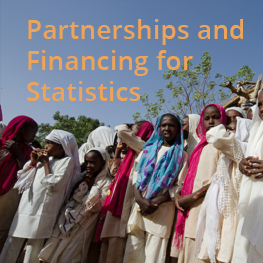
To understand how a partnership can mobilize and coordinate efforts around strengthening statistics, this report offers lessons learned from 27 evaluations of statistical capacity programs.
This article reviews three indexes that assess the openness or quality of data produced by national governments: The Open Data Barometer (ODB), the Open Data Index (ODI), and the World Bank’s Statistical Capacity Index (SCI).