

Open Data Inventory (ODIN)
The Open Data Inventory (ODIN) is a global assessment of the coverage and openness of official statistics. Covering nearly 200 countries, ODIN shows whether important social, economic, and environmental data are available and how well published data meet open data standards that make them easier to access and reuse.
National statistical offices, policymakers, development partners, researchers, civil society, and other data users can use ODIN to identify gaps, compare progress, and find opportunities to strengthen national data systems.
About ODIN
Reliable and accessible official statistics are essential for understanding people’s lives, guiding public policy, tracking development, and holding institutions accountable. But data are only useful when they are available, sufficiently complete, and published in ways that allow people to find, understand, and reuse them.
Since its launch in 2015, ODIN has provided an independent and consistent way to assess these qualities across countries. ODIN measures coverage—whether important statistics are available, including data over time, for different population groups, and at subnational levels—and openness—whether published data can be easily accessed and reused through open formats, appropriate metadata, download options, and open licensing. Country profiles allow users to explore results in detail, compare performance, identify strengths and gaps, and review recommendations for improvement.
ODIN has grown into one of the world’s most comprehensive assessments of official statistics. The current 2026/27 assessment covers 198 countries and evaluates more than 60 indicators across 23 categories of social, economic, and environmental statistics. ODIN also contributes directly to global monitoring: the ODIN Coverage Index is one of the official measures used for Sustainable Development Goal indicator 17.18.1 on statistical capacity.
What ODIN does
Assessment & Benchmarking
ODIN independently assesses the coverage and openness of official statistics using a common methodology across countries. Country scores and profiles allow users to identify gaps, track progress over time, compare results, and understand where changes in data production or publication practices could make official statistics more complete, accessible, and useful.
Country Support & Engagement
ODIN is designed to support improvement as well as measurement. National statistical offices are invited to review preliminary assessments, provide feedback, and identify additional official data sources. Open Data Watch also provides technical assistance, workshops, training, and country-level support that help institutions understand their results and turn assessment findings into practical improvements.
Research & Advocacy
ODIN provides a global evidence base for understanding progress and persistent gaps in official statistics. Open Data Watch uses ODIN findings to produce global reports and thematic research, examine emerging issues affecting data systems, and advocate for policies and investments that improve the availability and openness of official data.
ODIN findings also contribute to international monitoring, including Sustainable Development Goal indicator 17.18.1.
Our Role
Open Data Watch created ODIN and leads its methodology, assessments, quality review, analysis, and publication. ODIN is designed as an independent assessment, while giving national statistical offices an opportunity to review preliminary findings and provide information that can improve the accuracy and completeness of their assessments. Open Data Watch retains responsibility for applying the methodology and determining final results.
ODIN is supported by the William and Flora Hewlett Foundation.
Key Resources
Related Content
ODIN 2026/27: The People and Processes Behind Assessments

Strengthening Open Data in Kazakhstan
ODIN 2026-27 Assessments Begin in May

ODIN 2024/25: A Decade of Progress with New Risks Ahead

ODIN 2024/25 New Round of Assessments Begins in June
First Look at ODIN 2022/23 Rankings

Meet the Researchers Behind the Open Data Inventory

ODIN 2022/23 Coming Soon
Countries Share Success Stories using ODIN

Podcast: DataJournalism Conversation with Shaida Badiee
ODIN Website to Get Major Overhaul in 2020
ODIN 2020 – New Indicators & Updates

A Long Way to Go for Data to Make a Difference

Data Deprivation: Progress Has Stalled
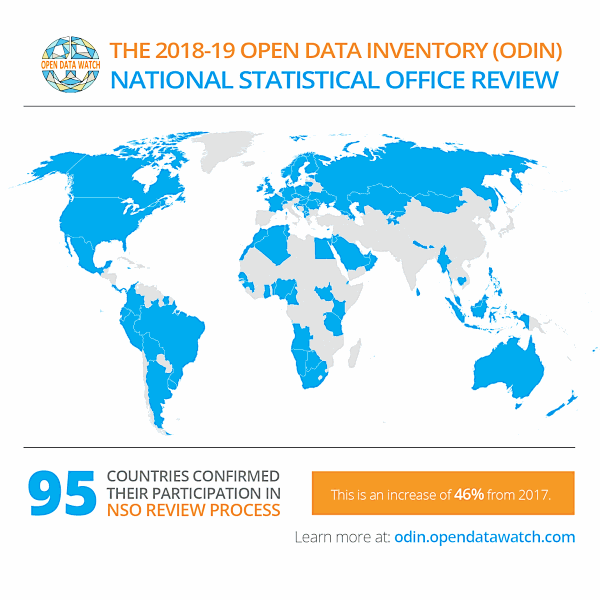
Country Engagement Reaches New High

Oman Creates Strong Action Plan for Official Statistics
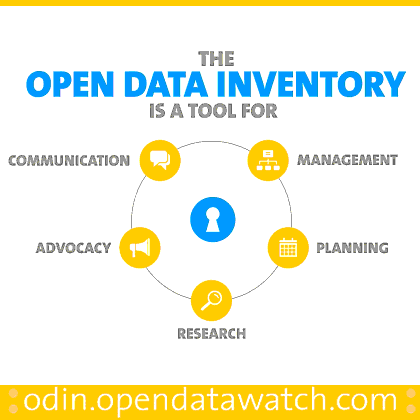
“It’s Not Just About Bragging Rights”
Open Data Inventory 2016

Open Data Inventory 2016 is Underway
What Makes an Effective National Statistical Office Website?
10 USES OF THE 2015 OPEN DATA INVENTORY (ODIN)