

From Assessment to Action: Strengthening Open Data in Kazakhstan
By Open Data Watch
11 May 2026
As countries prepare for the next round of the Open Data Inventory (ODIN), the focus is not only on measuring progress but also on supporting it.
In late April 2026, Open Data Watch (ODW) partnered with the Bureau of National Statistics of Kazakhstan, Korea e-Asia Fund, and the Asian Development Bank to host a three-day consultation mission in Astana. The workshop brought together national statistical offices and government agencies to review Kazakhstan’s ODIN results and translate those findings into concrete actions.
This type of engagement reflects a core part of ODIN’s role: not just as a global assessment, but as a practical tool that helps countries strengthen the coverage and openness of their official statistics.
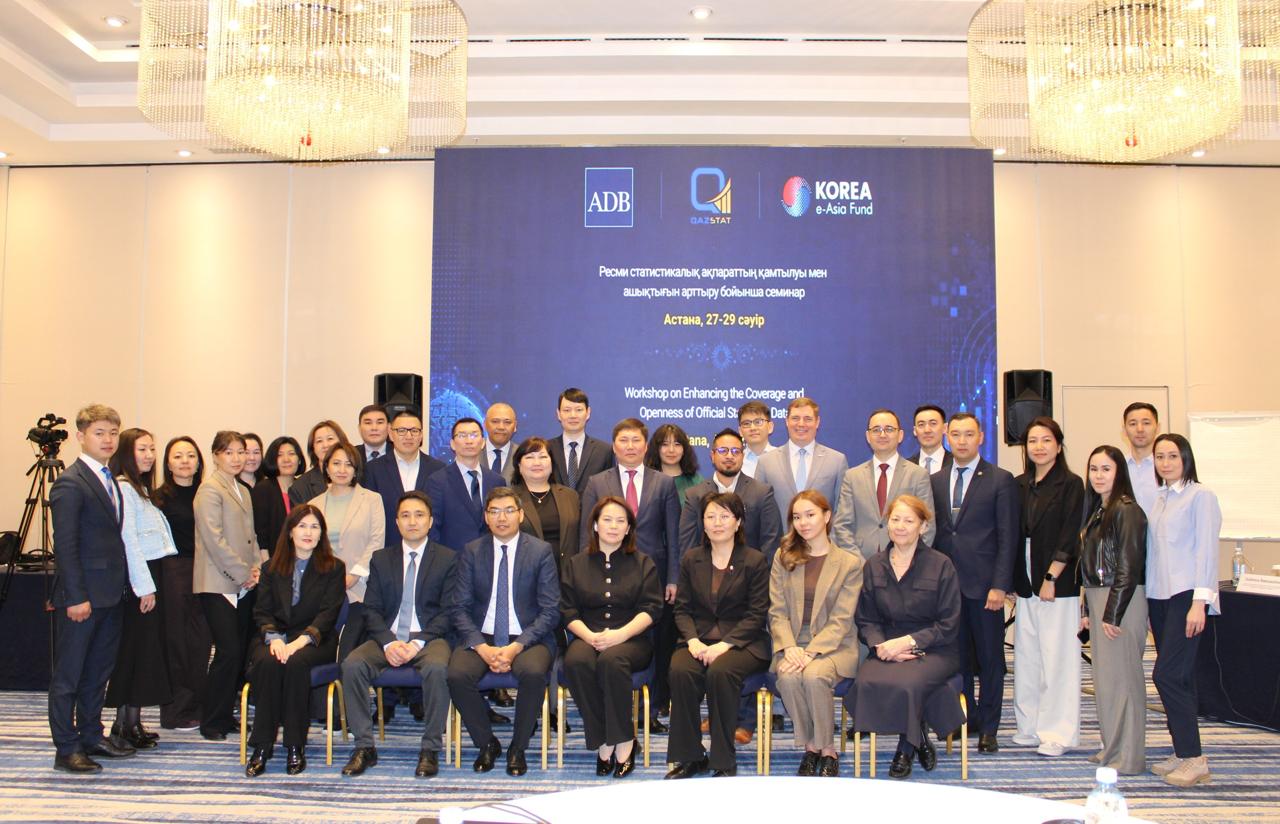
Colleagues attending the open data workshop in Astana, Kazakhstan pose for a group photo.
From ODIN Results to Action
The workshop opened with a review of Kazakhstan’s performance in the 2024 ODIN assessment and an introduction to the methodology.
“According to the results of ODIN 2024, Kazakhstan ranked 44th among 198 countries, improving its position compared with the previous assessment,” said Maksat Turlubayev, Head of the Bureau of National Statistics. “Improving our standing in international open data rankings is one of our priorities.”
Participants identified key gaps and prioritized actions to expand the use of administrative data, strengthen priority indicators, and increase the availability of high-value datasets. These efforts are already underway, focusing on improving data coverage, enhancing digital platforms, adopting machine-readable formats, and strengthening integration across government systems.
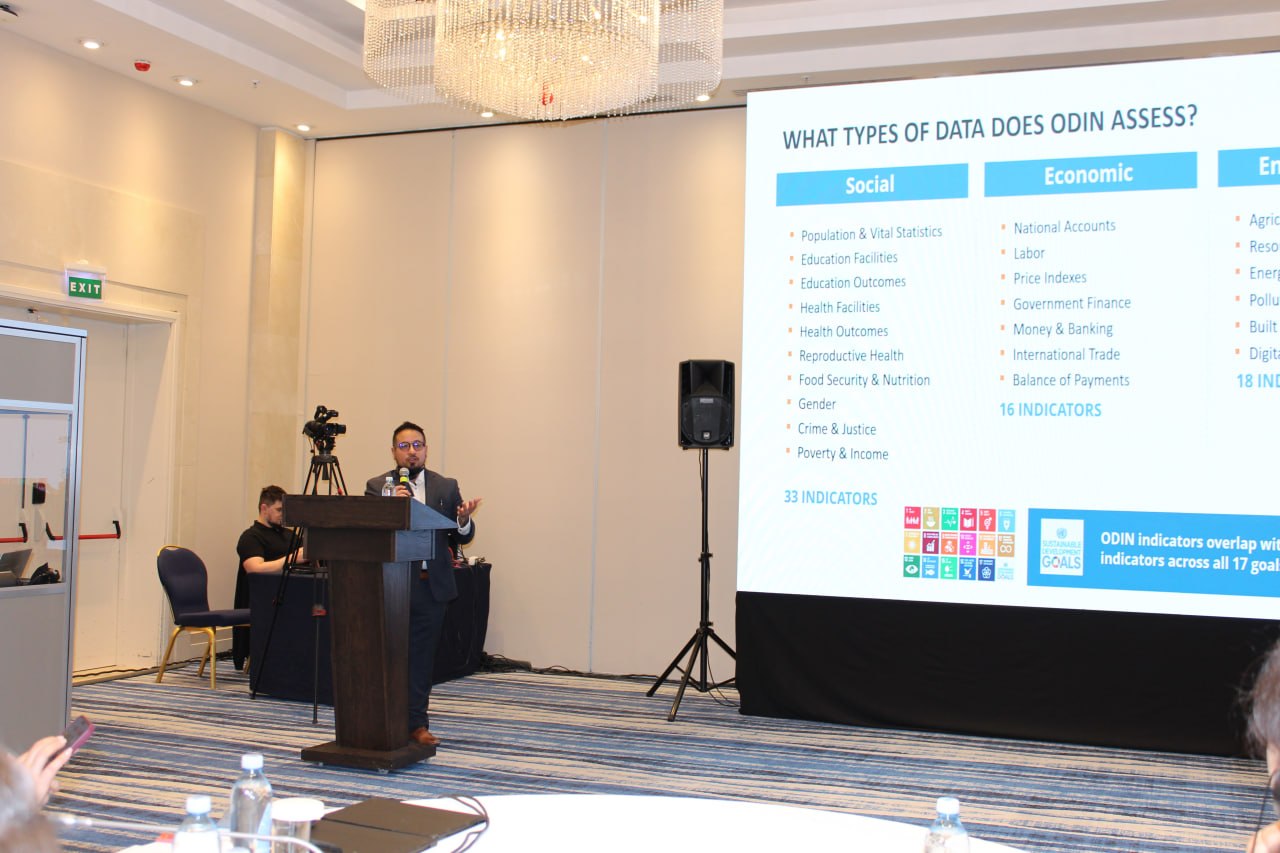
Data Manager, Jamison Henniger, presents the Open Data Inventory.
Improving Openness and Usability
The second day shifted focus from what data are available to how they are shared.
Through demonstrations of Kazakhstan’s data portals and other government platforms, participants assessed how well existing systems align with ODIN standards and international best practices. This included hands-on exercises reviewing data accessibility, machine-readability, and usability—key components of making data truly open and useful.
These sessions emphasized that openness is not only about publishing data, but about ensuring that users can easily find, access, and use it.
Building an Action Plan for ODIN and Beyond
The final day focused on turning insights into action.
Participants worked across institutions to identify priority actions, strengthen coordination, and develop a framework to guide improvements ahead of the next ODIN assessment.
“As part of this work, we will formulate recommendations and discuss the short-term steps that need to be implemented,” said Jamison Henniger of ODW. “Our goal is to identify realistic benchmarks so that Kazakhstan can become a global leader in open data.”
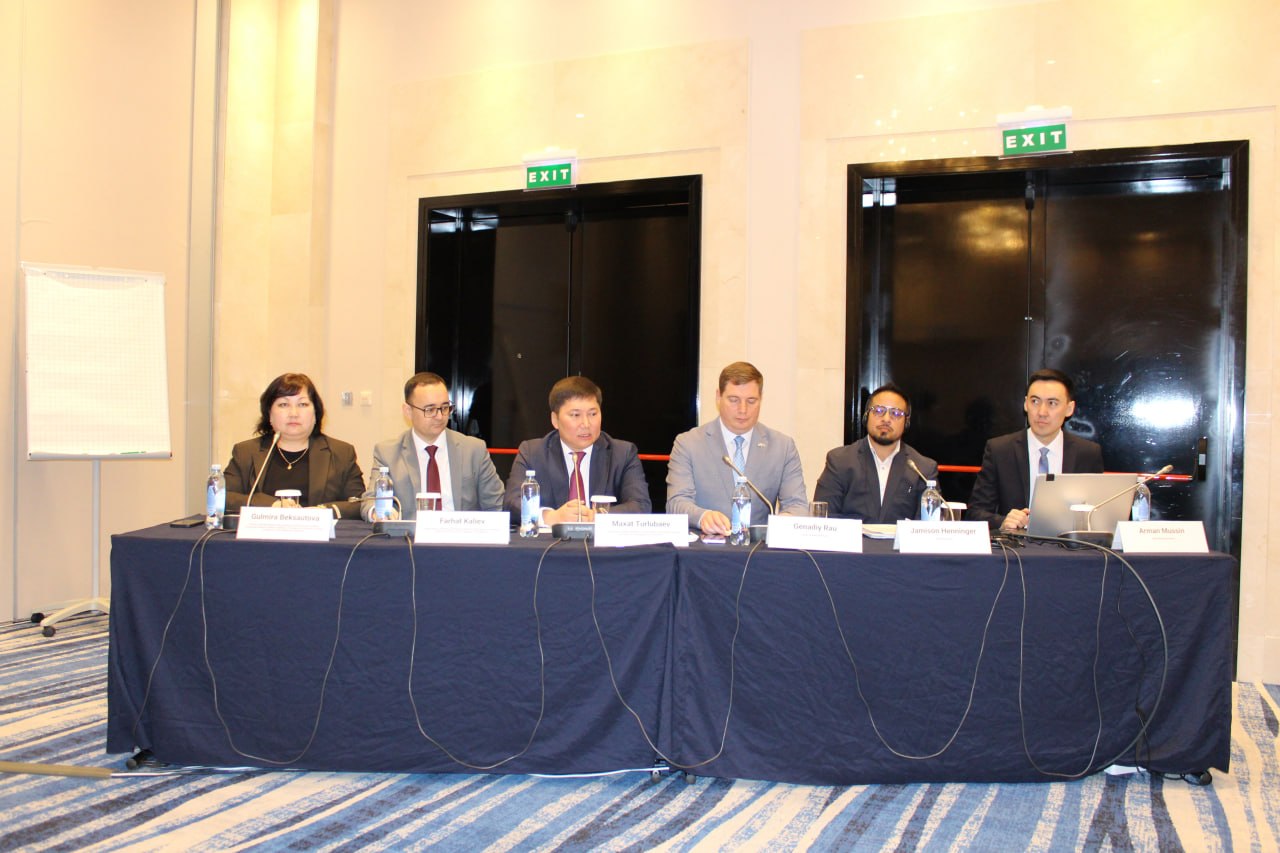
Panelists from ODW, the Bureau of National Statistics of Kazakhstan and the Asian Development Bank.
ODIN as a Tool for Country Engagement
This workshop in Kazakhstan is one example of how ODW works directly with countries to support improvements in official statistics.
ODIN provides a consistent, independent measure of data coverage and openness across nearly 200 countries. But its value extends beyond benchmarking. Through technical assistance, workshops, and country engagement, ODIN helps translate assessment results into practical steps that strengthen data systems over time.
Get Involved in the ODIN 2026/27 Assessment
The next round of ODIN assessments is now underway.
National statistical offices are invited to participate in the country review process, helping to validate data sources, suggest improvements, and ensure that results accurately reflect national systems. The sign-up period is open until 15 May 2026.