

AGCSF 2026 Recap: Strengthening Gender and Child Data Across Africa
by ODW-Data2X Team
30 July 2026
Open Data Watch-Data2X participated in the inaugural Africa Gender and Child Statistics Forum (AGCSF) in Yaoundé, Cameroon. The forum, which took place 6–10 July 2026, convened many stakeholders across sectors under the theme of “Statistics that Matter: Advancing Rights, Justice, and Opportunities for All” to elevate the role of data in more inclusive development and to strengthen data ecosystems across Africa. This new phase of the forum, building on seven years of the Africa Gender Statistics Forum (AGSF), formally recognized the interconnectedness of data on women and children, reflecting the strong linkages between their lived experiences along the Data Value Chain. This marked an important milestone for the forum and its longtime partners—and will likely evolve further in the future, along with data ecosystems that are becoming more inclusive.
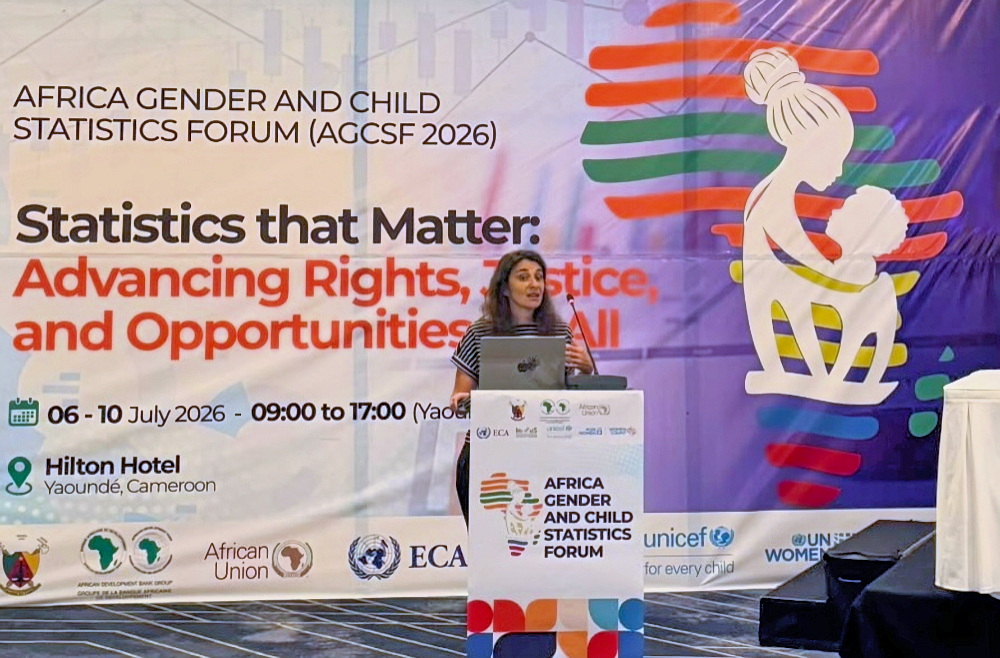
AGCSF 2026 was co-organized by the African Development Bank, the African Union Commission (AUC), the United Nations Economic Commission for Africa (UNECA), UN Women and UNICEF, in collaboration with the National Institute of Statistics of Cameroon (INS). It brought together government officials, national statistical offices, international development partners, civil society organizations, and actors across sectors. Throughout many sessions over five days, participants discussed how to strengthen the production and use of gender and child statistics across Africa to enhance evidence-based policymaking that is more accountable, inclusive, and just. As the 2030 benchmark for the Sustainable Development Goals (SDGs) gets closer, it is increasingly important for regional and global partners to consider the way forward, with actionable goals rooted in data.
Why This Year Was Different
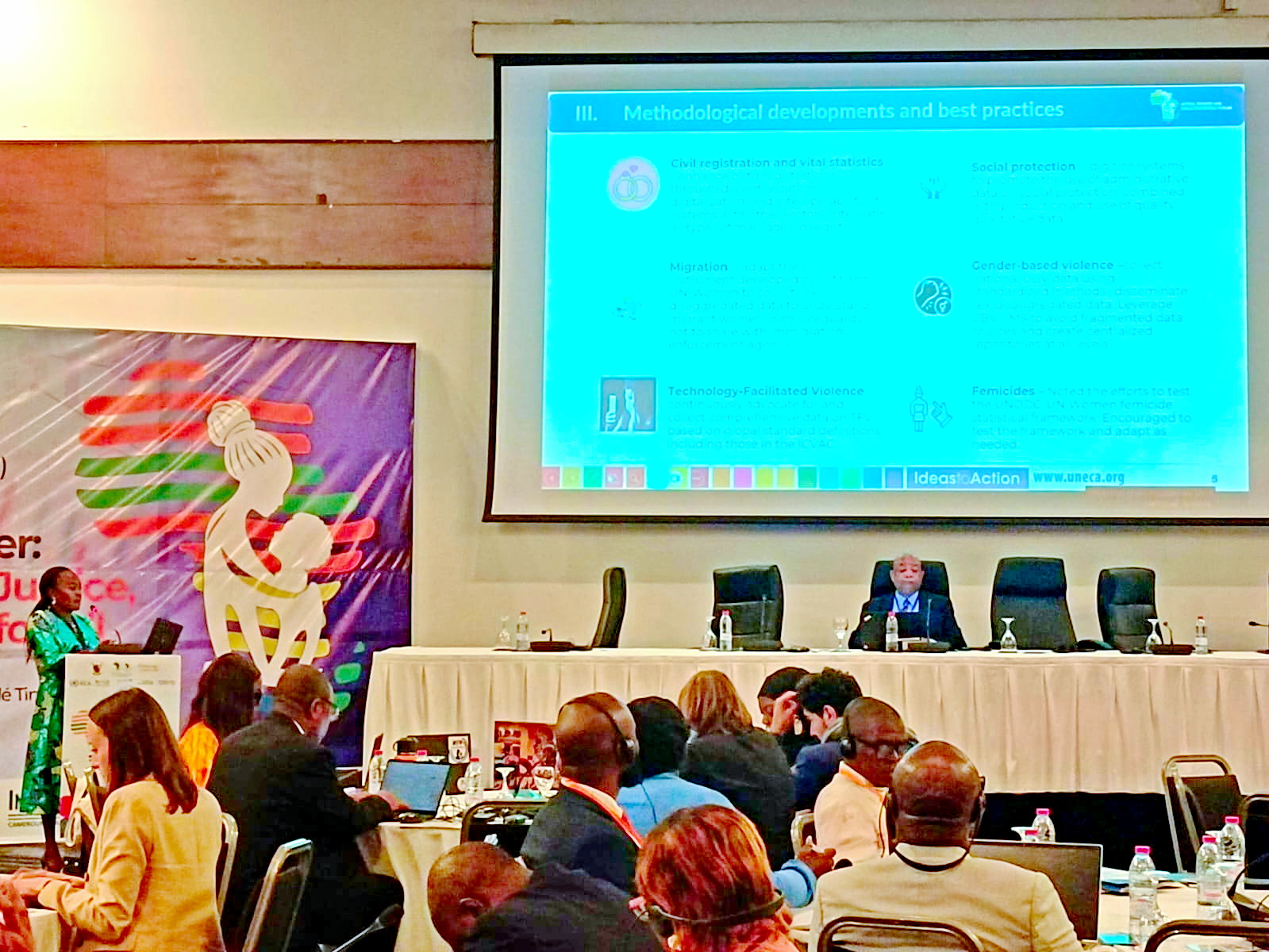
One of the most notable shifts this year was the expansion of the forum scope to explicitly include child statistics alongside gender statistics, as mentioned in the introduction. While previous editions focused primarily on advancing gender data, AGCSF 2026 acknowledged that the realities experienced by women and children are deeply interconnected and cannot be fully understood in isolation.
The inclusion of child statistics encouraged participants to think beyond sectoral silos and adopt a life-course perspective. Discussions explored how inequalities accumulate over time, from birth registration and nutrition to education, social protection, employment and care responsibilities—and how integrated data systems can better capture these dynamics. Rather than treating gender and child data as separate agendas, the forum emphasized their complementarity within stronger national data ecosystems.
This evolution also reflected a broader shift taking place within official statistics: moving from producing individual datasets toward building integrated systems capable of informing policies that address complex, interconnected social challenges.
The Gender Data Network Impact

The AGSF has been instrumental in the growth of the Gender Data Network (GDN) across the continent since its launch in 2019. More than an annual technical meeting, the forum has become an important space for building and sustaining a community of practice among gender statisticians.
Each year, the forum brings together colleagues who work on similar challenges in different countries, providing an opportunity to reconnect, renew professional friendships, and welcome new members into the Network. These face-to-face interactions strengthen the trust and relationships that underpin effective peer learning and collaboration.
The conversations do not end when the forum closes. Throughout the year, GDN members continue exchanging experiences and supporting one another through webinars, virtual community meetings, the Network’s WhatsApp group, and other peer-learning activities. This ongoing engagement allows members to seek advice, share practical solutions, and learn directly from countries facing similar challenges.
As AGSF evolves into AGCSF with the inclusion of child statistics, the forum offers an even richer platform for collaboration. While maintaining its strong foundation in gender statistics, it creates new opportunities for practitioners to exchange experiences across related fields and continue building a connected, supportive community that extends well beyond the annual meeting.
Highlights from the Forum
Several broader reflections stood out throughout the week. First, there was widespread recognition that today’s challenges require stronger collaboration across institutions and sectors. No single organization can produce or use the data needed to address complex development challenges alone.
Second, many discussions highlighted the growing importance of data use. While significant progress has been made in strengthening data production across Africa, equal attention must now be given to ensuring that statistics inform policies, budgets, and public debate. The conversation is gradually shifting from asking “Do we have the data?” to “How are the data being used?”
Finally, despite ongoing financial constraints affecting statistical systems globally, the forum demonstrated a strong commitment to innovation and partnership. Whether through integrating citizen data, strengthening communication, expanding peer learning, or fostering regional collaboration, participants consistently emphasized that resilient and inclusive data ecosystems depend on both technical excellence and sustained collaboration.
The inaugural AGCSF therefore marked more than a change in name. It reflected an evolving vision of official statistics, one that is increasingly integrated, people-centered, and focused on ensuring that data ultimately lead to better outcomes for women, children, and society.
We contributed to these broader conversations through two sessions that focused on strengthening the enabling environment for gender data systems and expanding the role of citizen data in inclusive data ecosystems.
Key Takeaways from Our Sessions
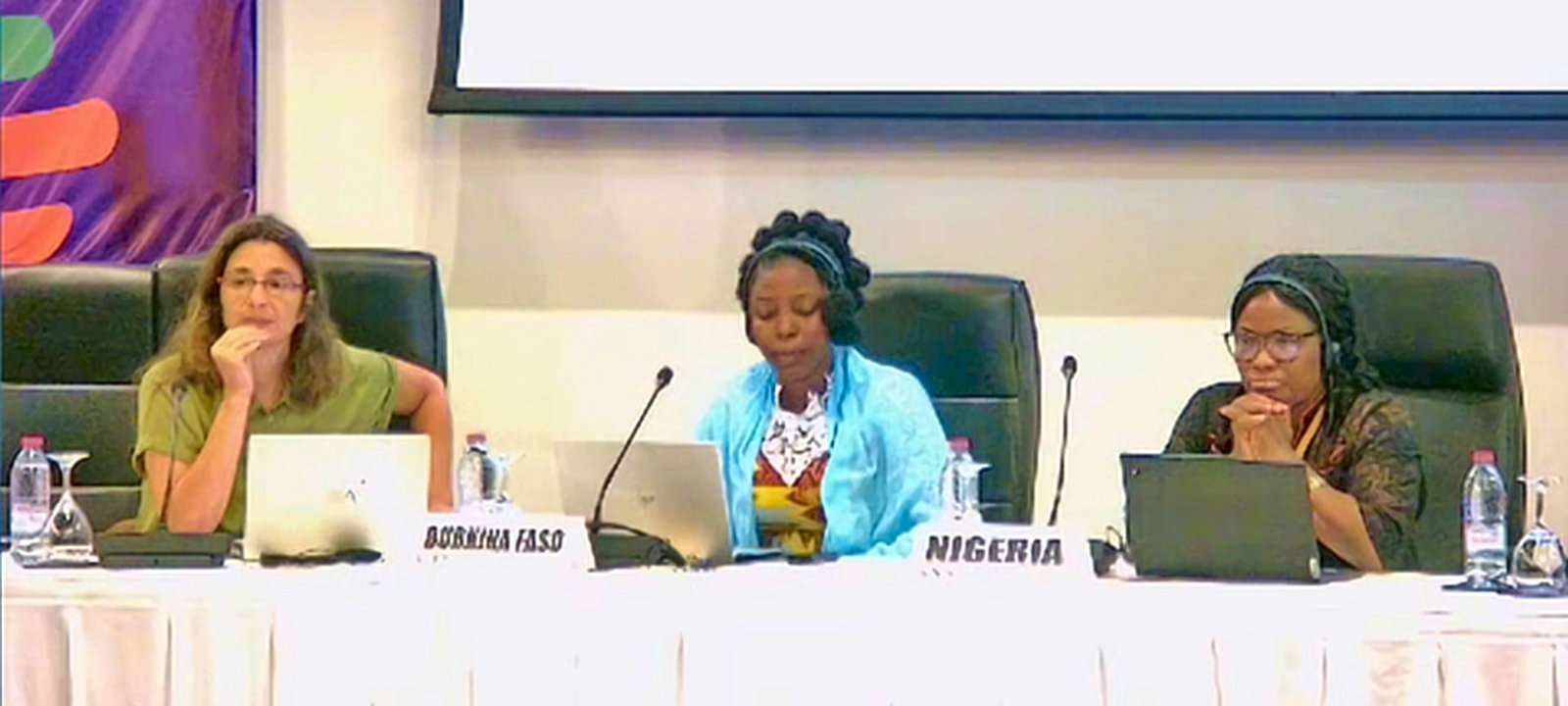
From Data to Decisions: Strengthening the Enabling Environment for Gender Data Use Across the Data Value Chain
A key takeaway from the Open Data Watch and PARIS21 session was that strengthening gender data systems requires equal attention to data use as to data production. Creating an enabling environment means systematically investing in the capacity of national statistical offices, other data producers, and data users to communicate, interpret, and apply gender statistics in decision-making.
Participants emphasized that data use should not be viewed as the final stage of the data cycle, but rather as a consideration that is integrated throughout—from identifying user needs and designing data collection to analysis, dissemination, and engagement with decision makers. This approach helps ensure that gender statistics respond to policy priorities and are translated into actionable evidence that informs policies and programs to improve the lives of women and girls.
The session also highlighted the importance of strengthening partnerships and continuous dialogue between data producers and users. By fostering collaboration across the data ecosystem, countries can ensure that gender statistics are not only produced, but effectively communicated, understood, and used to drive meaningful change.
Citizen Data: Strengthening Gender Statistics Through Inclusive Data Ecosystems
One of the recurring themes throughout AGCSF 2026 was the growing need to look beyond traditional data sources to address persistent gaps in gender and child statistics. Across multiple sessions, participants acknowledged that, in an increasingly complex data ecosystem, alternative sources of data—including citizen data—have an important role to play in complementing official statistics and providing more timely, contextual, and inclusive evidence.
The Collaborative on Citizen Data session, organized by Open Data Watch, built on this discussion by emphasizing that citizen data is not intended to replace official statistics, but to strengthen statistical systems. Depending on the context and purpose, citizen data can be integrated into official statistics, used alongside official data to provide additional insights, or remain an independent source of evidence that informs policy and advocacy.
Participants also stressed that realizing this potential requires strong partnerships between national statistical offices, civil society organizations, and other data producers, as well as clear approaches to quality assurance, governance, and ethical safeguards. National Statistical Offices have a critical stewardship role in determining when and how citizen data can be responsibly used while maintaining trust in official statistics.
The session concluded by highlighting the importance of continued collaboration and shared learning. Through the Collaborative on Citizen Data, countries are working together to develop practical guidance, exchange experiences, and support the responsible use of citizen data in ways that strengthen official statistical systems and contribute to more inclusive decision-making.