ODW is an international non-profit, non-governmental organization that monitors progress and provides assistance to organizations that produce and manage official statistics on how to use open and accessible data to meet Sustainable Development Goals. Data2X is an international technical and advocacy platform dedicated to improving the quality, availability, and use of gender data to make a practical difference worldwide. As of May 2026, Data2X enters its next chapter at Open Data Watch, continuing its work to ensure gender data is integrated into the broader global data ecosystem.
Tracing the evolution of the global gender data ecosystem, this Reflection Report looks back on more than a decade of Data2X’s work and contributions to advancing more inclusive data for effective policymaking as Data2X enters its next chapter with ODW.
The partnership will shift Data2X’s gender data work and integrate it into Open Data Watch’s broader data systems efforts to better inform policies and improve outcomes for women and girls worldwide.
Only 1 of 7 SDG indicators have data disaggregated by more than one population characteristic, leaving vulnerable people in intersecting situations invisible to national statistics. This paper presents an actionable planning guide for impactful intersectional data.
Analyzing multi-layer interactions of a successful enabling environment. this brief diagnoses critical factors for facilitating movement from collection and publication of gender data to its use and impact,
This brief shares examples of how gender data are shaping policies and actions around the world, and how collaborative efforts by a wide range of groups can substantially improve gender data use and impact.
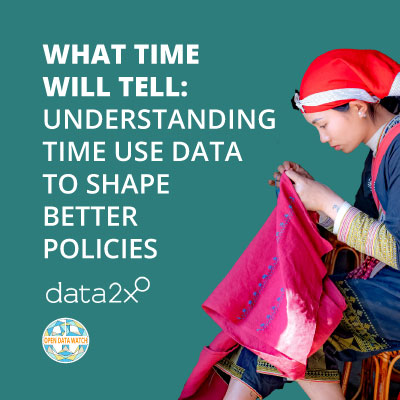
Time use data for paid and unpaid work reveal where informed policies can have real impact on, for example, social protection, gendered labor, care-giving, the economy and the environment. This brief explores the trends and potential of time use data and evaluates examples of impact already seen in various countries.
While traditional data disaggregation — separating data by gender, age, or income — helps identify disparities, it often misses how multiple factors overlap. Intersectional data allows us to see the full picture.
This brief provides a practical guide for planning to build better data systems by integrating intersectionality at each stage of the data value chain, improving the quality and value of data, and creating meaningful impact.
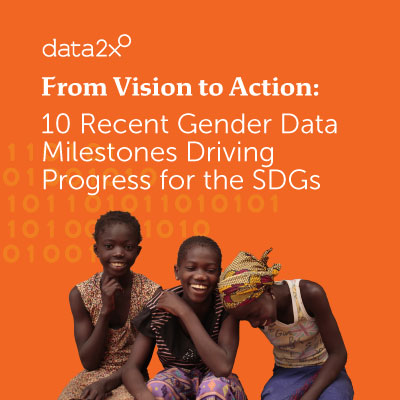
Gender data is now deeply woven into SDGs with ten notable areas of achivement to close data gaps, integrate gender data into policymaking, and create lasting partnerships that improve gender equality worldwide.
Well-resourced statistical systems ensure accurate and comprehensive gender-disaggregated data essential to informed policymaking. But countries are facing tightening international assistance for data, so this report examines options for domestic resourcing to assure sustainability and autonomy of national statistical initiatives.