
Nairobi Action Plan (NAP) for Time Use Data and Public Policy:
For Discussion

“GDP is a partial mark of the health of our economies. Time is our most valuable resource – and for too long, data on time use has been invisible even though it is indispensable.” — Wainaina Muigai, Director, Macroeconomic Policy Division, State Department for Economic Planning, Kenya
Introduction
The Nairobi Action Plan (NAP) for Time Use Data and Public Policy marks a pivotal moment in global efforts to make Time Use (TU) data central to economic policy and decision-making. The plan was conceived at an October 21-22 meeting in Nairobi, Kenya—co-hosted by Kenya’s State Department of Economic Planning and the Kenya National Bureau of Statistics (KNBS)—which brought together governments, regional institutions, development partners, and experts to chart a coordinated path for flipping the script so that TU data collection and research is in service of policy agendas, embedding TU data into macroeconomic and sectoral policies across sub-Saharan Africa.
In the current context of African economies, where other drivers of growth are lacking, it is increasingly important to take advantage of the demographic window of opportunity that countries in the region offer; harness the productive capacity of a growing labor force; and complement the focus on national income with broader aggregate economic measures. By capturing the intersection between the market and non-market sectors, TU data should offer African finance ministries and economic planners valuable information to identify new drivers of productivity and growth.
To date, TU data have been vastly underutilized, treated mostly as a technical data product or gender-specific indicator while in reality they capture the full spectrum of paid and unpaid activities that structure economies, households, and communities. When integrated into economic models and policy systems, TU data provide governments with essential evidence on labor supply, productivity, care burdens, and health promotion behaviors, and the opportunity costs of unpaid work. TU data yield useful information on the impact of public policies; these data also inform more comprehensive measures of aggregate economic output.
This draft document—for consultation with NAP key stakeholders and potential participants—captures main ideas about the NAP’s objectives, structure, and governance that were discussed at the meeting. These ideas will be further developed and refined through consultations during the first quarter of 2026, coordinated by Open Data Watch (ODW).
Objective
The Nairobi Action Plan (NAP) for Time Use Data and Public Policy aims to unlock the value of TU data for informing macroeconomic and sectoral policies—particularly in health, agriculture, and labor—that drive growth and wellbeing in sub-Saharan Africa. The plan calls for a multi-stakeholder collaborative, the Time Use for Economic Policymaking Collaborative, with clear objectives, activities, and a time-bound NAP work program that builds on existing efforts. By fostering a dialogue between policymakers, civil society, researchers, and data producers, the NAP and the collaborative will shift TU data from a siloed gender statistic to an integral input to shape public policies.
The collaborative is envisioned as a transitional mechanism. After an agreed period, its assets and tools will be transferred to partner institutions to sustain impact and institutionalize best practices.
Rationale
Before the October meeting in Nairobi, two macroeconomic roundtables held in 2024 with support from the Gates Foundation affirmed the importance of TU data for understanding unpaid work and its macroeconomic implications. Technical and policy experts at these roundtables emphasized the need for a country-led, demand driven approach to fully utilize the potential of TU data in the service of public policy and a parallel need to improve quality data production and analysis—underscoring that improvements and innovations in TU data collection, data harmonization, and macroeconomic modeling are needed for good fiscal and sectoral policy and for integrating TU data into national accounts. Despite available technical tools and standards, uptake remained limited due to capacity gaps, fragmented data systems, and insufficient awareness of policymakers regarding the utility of TU data for their agendas. Modeling innovations, such as gender-aware CGE models and fiscal incidence simulations were emerging, but translating these insights into actionable policy remained a challenge.
The Nairobi macroeconomic roundtable shifted the conversation from theory to practice. It showcased how TU data can move beyond measurement to inform real policy change, for example through Kenya’s care policy, satellite accounts, and gender-responsive planning. Country examples from Ethiopia, Senegal, South Africa, and Uganda further highlighted how TU data support growth and economic resilience. Participants identified actionable pathways: institutionalizing regular surveys, embedding TU data in budgeting cycles, and fostering regional collaboration for harmonization and peer learning. They proposed forming a collaborative to sustain momentum, track implementation, and organize around a shared action plan—the “Nairobi Action Plan for Time Use Data and Public Policy.” This plan would serve as a roadmap for advancing TU data along the data value chain with an emphasis on policy uptake and impact.
The Plan’s Framework
The NAP’s framework upends the standard practice of data production originating before and separately from data usage and policy needs. It places policy needs at the center of the intersection between data production and usage, with open and timely communication flows which the collaborative structure will facilitate. The enabling political environment for evidence-based policy; supportive stakeholders in government, civil society, international and regional agencies; and the technical and implementation capacity in producing, analyzing and translating TU data points into policy insights influence communication flows and usage of TU data to address policy needs (Figure 1).
Figure 1: Enablers of More Effective Public Policies
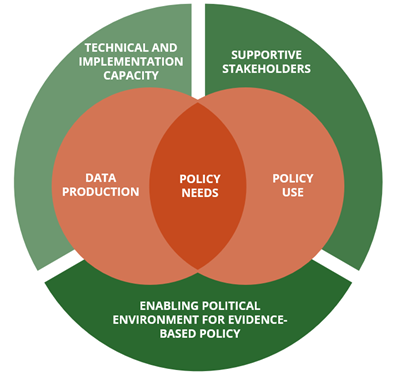
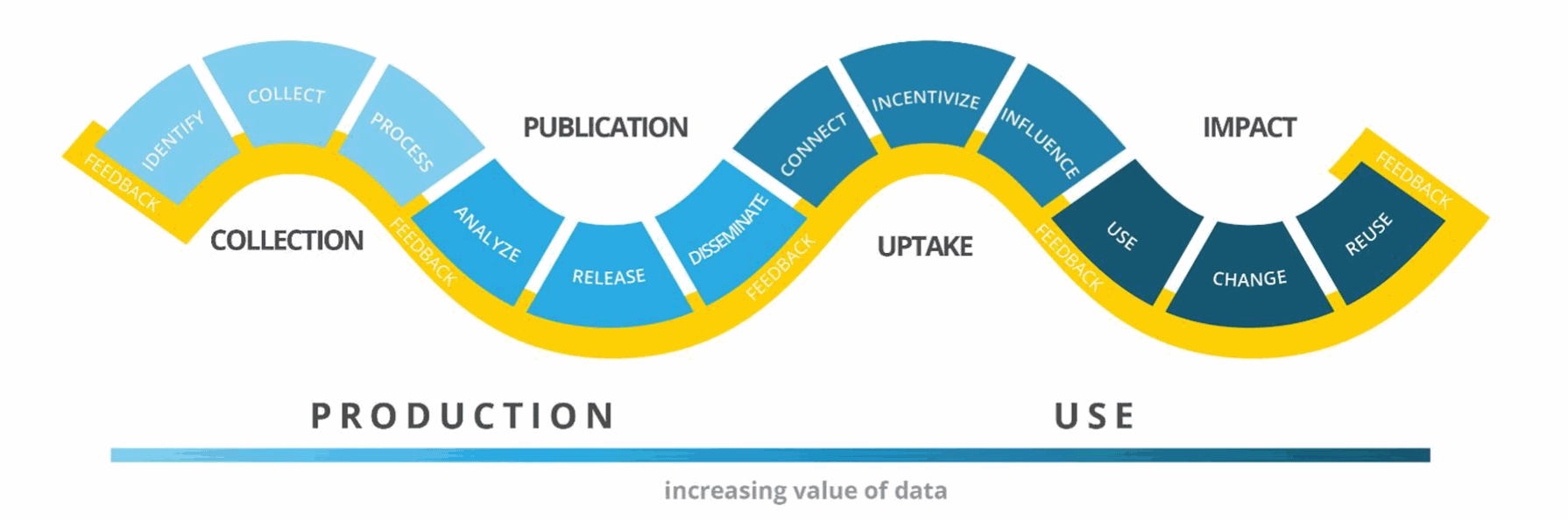
Starting from policymakers’ economic and sectoral planning and data analysis needs, the NAP will strive to ensure that the TU data are high quality, parsimonious, relevant, timely, and user-friendly. To do this, the NAP will support partners in scaling the production, quality, and policy use of TU data across the data value chain—from policy needs to standards and collection, analysis, policy application, and impact monitoring. Workstreams will be structured and indicators defined along each stage of the data value chain to assist with the plan’s monitoring and evaluation.
Workstreams
The NAP’s workstreams will respond to priority macroeconomic and sectoral policy questions that TU data can help answer, addressing different stages of the data value chain. These include:
- Policy use: What questions do economic and sectoral planners need answered for informing budgets, designing policies, and evaluating policy outcomes? What questions do fiscal, health, and other sector advocates need answered?
- Uptake: How can countries make better use of existing data to draw insights to serve better polices? How can new or existing models and experiments incorporate TU data to deepen their insights?
- Analysis: How can TU data-enabled models be used to answer policy questions and evaluate impacts?
- Data collection: How can future TU data collection be in service of policy and advocacy priorities and underlying analyses?
In addition to the above workstreams, the collaborative will develop a resource center or shared digital platform covering the policy utilization of TU data in sub-Saharan Africa, housing:
- A list of countries who plan for regular, cost-effective TU surveys or modules.
- Areas for further research and methodological alignment.
- Technological innovations in data collection, storage, and analysis.
- Mapping existing efforts to advance methodologies, analyses, and uses of TU data for policy purposes.
- Country case studies on the policy use of TU data.
- A learning and capacity-building agenda, including South–South exchange.
- Open data and greater use of existing data strategies.
Building on Existing Initiatives
The NAP will build its workstreams on existing regional, national, and international initiatives working with TU data. Examples of these initiatives at the national level across sub-Saharan Africa discussed at the Nairobi meeting are given below.
- Ethiopia embedded TU insights into its budgeting processes to better quantify and address the economic value of unpaid labor.
- Kenya’s leadership in operationalizing TU data served as a key example of how statistics can drive inclusive, evidence-based decision-making. Kenya’s Household Satellite Account (HSA) uses TU data to inform investments in healthcare, childcare, and education.
- Senegal’s TU findings prompted the Ministry of Women and Family to revise empowerment policies and launch new initiatives, including a national childcare strategy, a family subsidy program, and a women’s entrepreneurship fund.
- South Africa used two waves of national TU surveys to estimate the contribution of unpaid care work to GDP (30% of GDP in 2000 and 27% ten years later). In addition, TU data informed a government gender needs assessment and indirectly influenced the introduction of shared parental leave during childbirth.
- Uganda formally integrated into the Gender and Equity Budget Certification process, helping to ensure that budget allocations reflect the realities of unpaid care work and time poverty.
These country-level actions reflect a growing recognition of TU data as a foundational input for evidence-based policymaking. These are policy entry points for NAP’s workstreams in-country. They include but go beyond care policy and encompass labor market design, health and education investments, and specific budget allocations. Those are just initial investments—there is the potential of using TU data to inform a wider range of economic and sectoral policies and enrich macroeconomic analyses. The examples are only a tipping point and promise of what can be a fruitful and efficient use of TU data across economic and sectoral policies.
The Role of Regional Bodies and Multilateral Organizations
Regional and multilateral institutions play a critical role in advancing the collection, harmonization, and policy use of TU data across Africa and globally. Their efforts are helping countries move from isolated survey efforts to integrated, policy-relevant data systems:
- The UN Economic Commission for Africa (UNECA), through its Africa Centre for Statistics, is supporting regional harmonization of TU methodologies and facilitating peer learning across African countries.
- The United Nations Statistics Division (UNSD) is leading global standardization efforts through tools such as the International Classification of Activities for Time-Use Statistics (ICATUS) 2016 classification, the Minimal Harmonized Instrument (MHI), and the 2024 UN Guide on Time Use Statistics, which provide a shared foundation for countries to align their data collection and reporting practices.
- UN Women is providing financial and technical support to TUS implementation in Africa through the Making Every Women and Girl Count program and other initiatives. Its support has included regional capacity building through a time use statistics training curriculum for African countries and linkages to policy uptake, including through innovative tools such as the Toolkit for Gender Mainstreaming in Gender‑Responsive Budgeting.
- The International Labour Organization (ILO) has developed a Time Use Toolkit that attaches modular diaries to labor force surveys, enabling more efficient and scalable data collection in low- and middle-income countries while maintaining statistical rigor.
- The International Monetary Fund (IMF) is exploring the integration of TU data into macroeconomic surveillance and country operations, recognizing their value for analyzing labor supply, productivity, and gender-responsive fiscal policy.
- The World Bank is supporting country-level uptake of TU data through initiatives such as the Africa Gender Innovation Lab and is advocating for its use in evaluating labor market dynamics, social protection programs, and inclusive growth strategies.
Collectively, these organizations help build knowledge and support capacity building for TU data to be collected regularly, analyzed effectively, and used meaningfully in policy design and evaluation.
Coordination Platform
Participants at the Nairobi meeting proposed establishing a multi-stakeholder collaborative to sustain momentum, organize around the NAP to foster ongoing collaboration, and track implementation and outcomes. To support its implementation, ODW would host a small secretariat for the “Time Use for Economic Policymaking Collaborative” to identify country demand as well as mobilize resources and partners to address these demands. The secretariat would facilitate open and timely communication and coordination among policymakers, data producers, and advocates in participating countries and agencies; develop a resource center on the TU policy-data linkage, including innovations in methodologies, the latest on economic modeling and applications to country policymaking, and country case studies of the policy influence of TU data. The secretariat would coordinate with donors and support fundraising for implementing the NAP and contribute to one or more NAP workstreams.
The collaborative will serve as a platform for open communication and knowledge sharing, advocacy, and resource pooling, while addressing challenges that no single agency can tackle alone. By leading in the implementation of the NAP, the collaborative will amplify its work and support broader uptake across the region. Its operating model will focus on building close links between policy and data, sharing practical knowledge among countries, and strengthening the capacity to mainstream TU data into national policy and data systems.
Underlying the collaborative is the belief, underscored at the Nairobi meeting, that effective use of TU data for policy and planning requires institutional readiness to be achieved through technical support and capacity building, strong coordination across institutions, and cross-sector collaboration, all three considered essential to bridge the “last mile” of the data value chain. TU data cannot fulfill its potential without collaborative frameworks that support data interoperability, open access, and the capacity to analyze and interpret findings. Strengthening institutional collaboration is therefore not just a technical necessity but a strategic imperative for embedding TU data into national development agendas.
Collaborative Composition
Key to the success of any collaborative is its composition and commitment of its members. The multi-stakeholder composition of the Time Use for Economic Policymaking Collaborative will include representatives from national governments—from both the data production and policy usage sides—regional agencies, international agencies with data and policy mandates, research experts (in TU data methods, macro models and simulations, fiscal, policy and impact evaluation analyses), selected research or policy think tanks, and advocacy CSOs.
The Nairobi meeting participants are the foundation and form the initial list of collaborative members. They include representatives from the governments of Kenya—the lead co-sponsor represented by the State Department of Economic Planning and Kenya’s National Bureau of Statistics—Ethiopia, South Africa, and Uganda. UNECA is a key regional body for the collaborative. International agencies include ILO, IMF, UNFPA, UNSD, UN Women, and the World Bank. Research or policy think tanks include the Local Development Research Institute (LDRI), the Regional Center of Excellence for Research in Generational Economics (CREG), Yale EGC, and the World Bank Africa GIL—in addition to selected researchers with expertise in macroeconomic models and TU data analysis. Other countries for consideration include Malawi, Rwanda, Senegal, and Zimbabwe. Among potential other international bodies is UNDP Equanomics, and among potential NGOs are Bajeti Hub, IEJ, and ACET.
Governance
The collaborative’s proposed governance structure includes a multi-stakeholder steering group, a light ODW-hosted secretariat, and technical working groups for the different workstreams. ODW will draw lessons from other data collaboratives to propose a governance structure that is flexible and efficient. As the NAP undergoes consultation in the next few months, ODW will, in parallel,
- Confirm initial core membership and define criteria for expansion.
- Cost implementation options for the NAP and TU collaborative.
- Develop options for pooled funding (host arrangements, grant windows, allocation mechanisms, transparency, and accountability structures).
Monitoring Framework
Nairobi meeting participants emphasized the need for regular monitoring and evaluation to assess collective progress. Monitoring indicators will be defined using the stages of the data value chain (Figure 2). Proposed indicators include:
- Frequency and regularity of Time Use Survey (TUS) implementation.
- Integration of TU data into national budgeting and policy cycles.
- Uptake of TU insights in macroeconomic planning.
- Use of TU data to inform public finance for health, agriculture, and job creation.
- Integration of TU data in impact evaluations and calculations of returns to investment in public policies.
- Accessibility and openness of TU datasets to the public and researchers.
Figure 2: Data Value Chain
Communication and Visibility
Clear communication and data visualization are essential for making TU data relevant to policymakers and the public. Proposed dissemination channels include:
- Launch of the TUS data collaborative and presentations at relevant global gatherings such as the UN Statistical Commission, Beijing+30 reviews, World Bank/IMF Meetings, the World Data Forum, IAFFE, PEPFA, and UNDP Global Dialogues, among others.
- Use of radio, public forums, and community engagement to build awareness and increase data ownership.
- Development of regional repositories and open data platforms to enhance visibility and usability.
- Publishing blogs and articles on countries’ efforts to scale up production and use of TU data.
Conclusion
The Nairobi Action Plan for Time Use Data and Public Policy marks a step toward making TU data a cornerstone of economic and social policymaking in Sub-Saharan Africa. Its central goal is to strengthen participating sub-Saharan African countries’ capacity between 2026 and 2028 to better utilize TU data to inform macroeconomic and sectoral analyses and policies—with particular attention to health, agriculture, and the labor market and, in turn, mobilize financing and policies to strengthen economic and human development outcomes in the region. Through the Time Use for Economic Policymaking Collaborative, a platform to enable implementation and foster dialogue between policymakers and data producers, the NAP aims to catalyze meaningful and sustained policy impact.