
Moments that Defined the 2025 Data Community
by The Open Data Watch Team
17 December 2025
2025 was a defining year for the data-for-development community. It was a year marked by disruption and reinvention: major funding cuts, political shifts, and new global pressures placed unprecedented strain on data systems just as the demand for timely, inclusive, and trustworthy data reached an all-time high. Yet it was also a year of resilience and innovation. Countries strengthened partnerships; new commitments were made, and global frameworks evolved.
For Open Data Watch (ODW), 2025 required agility and strategic clarity. We worked across financing, inclusive data, open data, and citizen data to respond to emerging risks—and to help chart a path forward. We continued our work in supporting statistical systems through capacity building and technical assistance, monitoring and assessments, and political advocacy and influence.
Below are the moments that defined our year, and how ODW helped move the ecosystem toward a stronger, more inclusive future.
DHS Funding Cuts Shake the Foundation of Global Health & Gender Data
One of the most significant shocks of the year came early: the drastic funding reductions to the Demographic and Health Surveys (DHS) in January. This disruption jeopardized data on maternal health, fertility, nutrition, gender-based violence, water and sanitation, and child wellbeing—all core pillars of the SDGs.
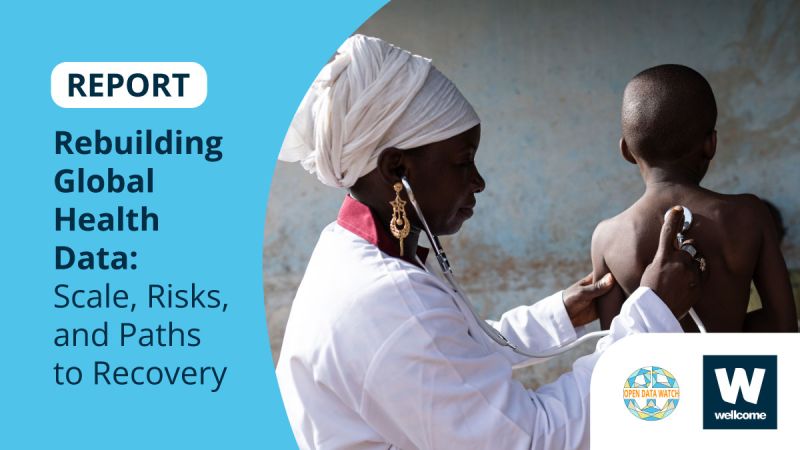
ODW and partners responded quickly. At the 57th UN Statistical Commission (UNSC), the UNSC established a Task Force within the UN Inter-secretariat Working Group on Household Surveys to assess the scale and impact of the cuts on national statistical offices (NSOs) and creating long-term solutions for national data production, which ODW was asked to join. We contributed to the analysis of a rapid assessment survey that captured insights from dozens of NSOs and co-authored the resulting report. In parallel, we partnered with Wellcome to produce Rebuilding Health Data Systems, a detailed stocktake of how 2025’s funding reductions affected global health data infrastructure.
Looking ahead to 2026, ODW is organizing a UNSC side event on Safeguarding Data Systems to highlight emerging risks and opportunities. We are preparing a discussion paper on the full range of safeguards needed for resilient data systems and will continue working with the task force to track global progress. Stay tuned!
| Learn More: |
Citizen Data Endorsed at the UN Statistical Commission
Another major milestone came in March, when the UN Statistical Commission formally endorsed the Copenhagen Framework on citizen data. This recognition signaled a turning point for citizen data to be more widely used as a complementary source for official statistics and for inclusive data practices—and validated years of collaborative work.
ODW played a central role as a member of the Collaborative on Citizen Data. In 2025, Francesca Perucci (Director of Policy and Partnerships), became co-chair of the Collaborative on Citizen Data and ODW began co-leading two new working groups on citizen data on Gender and Citizen Science. With citizen data now squarely on the global agenda, 2026 will focus on implementation and country support.
| Learn More: |
Pushbacks on Open Data: A Growing Threat
Around the world, some governments scaled back public access to foundational datasets—census and survey data, administrative data, microdata catalogs, and budget information, among others—often citing political sensitivities or fiscal constraints. These pullbacks highlighted ongoing concerns about transparency, accountability, and trust. Addressing these challenges aligns directly with ODW’s core mission to support open access to official data.
This year, ODW advanced that work by leading global open data efforts, including releasing the latest edition of the Open Data Inventory (ODIN), which continues to serve as a core tracking tool for SDG indicator 17.18.1, and launching Open Data Insights, a new series that uses ODIN to explore emerging questions and policy-relevant topics. We also expanded support to national statistical offices through Data for Now, co-hosting workshops with UNSD on open statistical systems that promote publishing by default, user-centered data portals, and stronger data governance. In parallel, we worked directly with countries to provide technical capacity on open data, including Japan, South Korea, Palestine, Mexico, India, Jordan, Kazakhstan, and Chile. Together, these efforts help reinforce openness at a moment when it is increasingly under pressure.
In 2026, ODW will continue to support openness and data coverage by initiating the next round of ODIN assessments, maintaining a consistent, global view of progress on open data.
| Learn More: |
A Shifting Development Finance Landscape
2025 was also a year of financial contraction. Development budgets fell across multiple donors. Gender data financing saw sharp declines. And several core statistical operations were disrupted. The Demographic and Health Surveys (DHS) and Multiple Indicator Cluster Surveys (MICS)—cornerstones for Sustainable Development Goal (SDG) policies and monitoring—were disrupted mid-cycle, with some rounds delayed or partially completed. And contractions in funding continue to strain the ability of national statistical systems to fulfill their missions.
Through the Clearinghouse for Financing Development Data, ODW provided visibility into financing gaps, emerging risks, coordination between country needs and donor priorities, and a special focus on gender data. Additionally, ODW provided insight on the Civil Registration and Vital Statistics (CRVS) financing landscape, revealing a fragmented donor ecosystem and the need for focused financing streams with transparent reporting systems. Looking ahead to 2026, this work will inform advocacy for smarter, more sustainable investments.
Learn More:
|
Gender Data Gains — and Setbacks
As the overall development finance landscape shifted this year, gender data was no exception. The funding cuts hit gender data especially hard, decreasing by nearly 7%, reminding the community of the vulnerability of a small pool of donors. Despite financial pressures, momentum around gender data remained strong. Countries advanced time-use measurement, partners gathered to ensure the gender dimensions of CRVS systems were not overlooked, and steadfast partners committed to supporting and replenishing existing tools supporting gender equality.
ODW continued to advance gender data use and impact, including CRVS & Gender, the Gender Data Network, country guidance on gender-responsive systems through our BRIDGE tool and its direct engagements with countries, and growing work on time use survey data for policy. Our work helped keep gender data visible—and viable—during a difficult year.
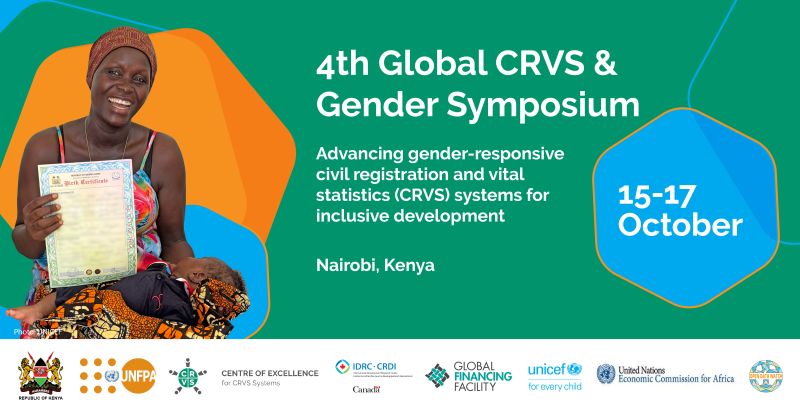
In 2026, ODW will build on this foundation by continuing country support and deepening work on time-use to strengthen the use of gender data in policy and decision-making.
| Learn More: |
Inclusivity Becomes a Contentious Word
In 2025, inclusivity itself became a point of contention. While some global actors stepped back from inclusive data and rights-based approaches, others doubled down on intersectionality, disability inclusion, and gender-transformative frameworks. These contrasting positions affected political commitments, financing flows, and program priorities.
Rather than retreating, ODW alongside Data2X continued to lead in this space, publishing three major studies on intersectional development data (IDD) focused on Canada, Colombia, and persons with disabilities. We also launched a practical guide on operationalizing intersectional data for policymakers, along with a research brief to accompany it. ODW has also been actively convening with partners as part of an intersectionality steering committee to advance this agenda. All this work has helped unify conversations across gender, disability, and data communities—at a time when coherence is urgently needed.
In 2026, ODW will continue expanding its work on IDD, expanding practical guidance for statistical offices, civil society organizations, and the broader data community.
Financing for Development Resurges After a Decade
The Fourth International Conference on Financing for Development (FfD4) brought renewed global attention to the role of data in sustainable development—the first such moment in nearly a decade. Its outcome document elevated data not only as a tool for measuring progress, but as a core input for policy design, resource allocation, and accountability.
A major milestone emerging from this process was the Sevilla Platform for Action (SPA): Future of Data, a partner-driven effort that sets out a shared vision and practical pillars for strengthening data governance, financing, capacity, and inclusion. ODW co-signed the SPA initiative and will continue to work with partners in 2026 to operationalize its commitments—supporting implementation tracks, helping define measurable actions, and shaping how progress will be monitored in the years ahead.
| Learn More: |
Momentum Builds Toward UNWDF 2026 on the Road to Riyadh
The data for development community has already begun preparing for the 6th UN World Data Forum, to be held in Riyadh, Saudi Arabia. The Programme Committee was reconstituted this year, and planning is well underway. Meanwhile, the “Road to Riyadh” series—nearly 20 events hosted by GASTAT—is emerging as a major convening force and momentum-builder leading up to November 2026.
As a longstanding member of the Programme Committee, ODW has continued to expand the Commit to Data initiative, celebrating its first anniversary with visible progress across nearly 75 commitments. Commit to Data will make its second UNWDF appearance in 2026—this time even more embedded in the Forum, more visible across sessions, and more action-oriented than ever.
Looking Ahead to 2026
The challenges of the past year helped sharpen the priorities guiding Open Data Watch’s work going forward. Protecting access to public data, sustaining the data programs that inform policy and SDG monitoring, advancing more inclusive data systems, and strengthening financing for data will remain central to our efforts. Looking ahead, ODW will continue working with partners across the data community to support these priorities and help ensure that data remains accessible, inclusive, and capable of delivering lasting public value.